



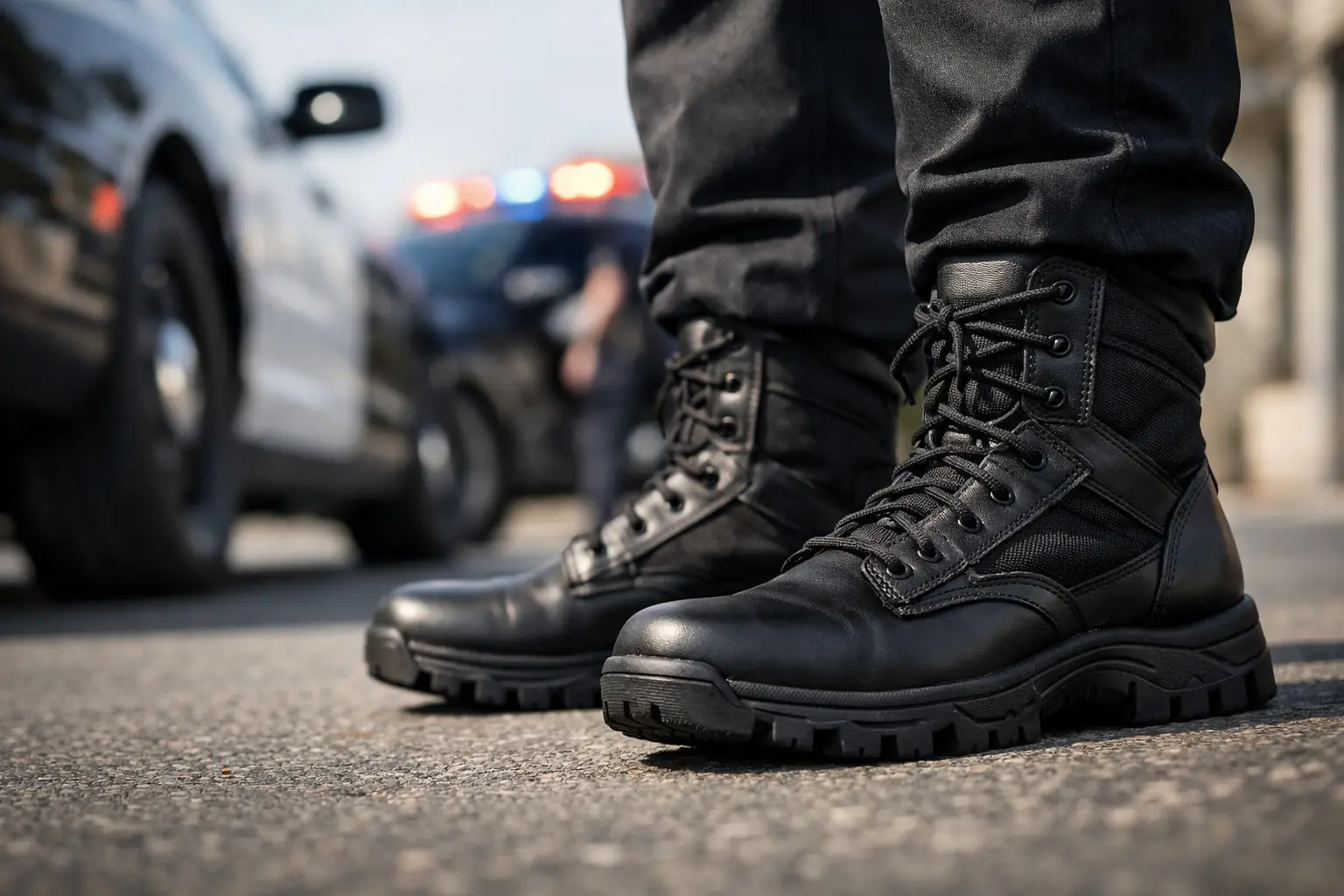
A police officer’s boots have to do more than complete a uniform. They need to handle long shifts, fast movement, changing weather, and unpredictable surfaces. The wrong pair can become uncomfortable fast. The right pair can help officers stay focused on the job instead of thinking about their feet.
When shopping for police boots, the best choice depends on your assignment, environment, department rules, and comfort needs.
Think About Your Daily Shift
Start by looking at how you spend most of your shift. Do you walk long distances? Sit and drive for long periods? Move in and out of a patrol vehicle often? Work in wet conditions? Spend time on concrete floors, sidewalks, grass, gravel, or stairs?
A boot for foot patrol may need lighter weight and strong cushioning. A boot for rougher outdoor work may need deeper tread and waterproofing. A boot for formal duty may need a cleaner, polishable look.
BootsPlusMore’s broader men’s boot collection mentions options for lightweight side-zip duty boots for police patrol, slip-resistant shoes for warehouse shifts, and composite toe boots rated to ASTM F2413 for construction work.
Comfort Should Come Before Looks
A boot may look sharp but still be wrong for daily duty. Comfort starts with fit. The boot should hold the heel securely, allow enough toe room, and support the arch. The ankle should feel stable without rubbing.
Cushioning also matters. Officers often stand or walk for hours, so midsoles and footbeds should reduce impact. Breathable or moisture-wicking linings can also help keep feet more comfortable during active shifts.
BootsPlusMore’s tactical collection includes boots with padded collars and tongues, lightweight construction, and rubber outsoles made for multi-surface traction.
Check the Outsole
Traction is one of the most important features in a duty boot. Officers may move from dry pavement to wet tile, grass, gravel, or stairs within minutes. A weak outsole can increase the chance of slips or poor footing.
Look for rubber outsoles, tread patterns suited to your environment, and slip-resistant features when needed. If you work mostly indoors, you may prefer a tread that grips without tracking too much debris. If you work outdoors, deeper tread may be better.
Decide Between Waterproof and Breathable
Waterproof boots can be valuable for rainy shifts, wet grass, roadside work, and outdoor calls. The trade-off is that waterproof boots may feel warmer than non-waterproof options.
Breathable boots can be better for hot climates or indoor-heavy work. Some officers may need both, depending on the season.
BootsPlusMore carries tactical options that include waterproof DryGuard models, along with lightweight leather and nylon designs for duty use.
Side-Zip or Lace-Up?
Side-zip boots are popular because they save time. Officers can lace the boot once for fit, then use the zipper for quicker entry and removal.
Lace-up boots may offer a more traditional feel and allow finer adjustment each time. Some officers prefer lace-up boots for training or rougher duty because they can control tightness across the foot and ankle.
The right choice depends on comfort, policy, and how quickly you need to get ready.
Compare Before You Buy
For officers, academy recruits, and duty professionals comparing police boots, BootsPlusMore offers patrol and tactical footwear options designed around traction, comfort, support, and daily duty needs.
Final Thoughts
Police boots should match the job, not just the uniform. Before buying, compare fit, cushioning, outsole grip, boot height, weight, waterproofing, and entry style.
Visit BootsPlusMore today to browse police boot options and choose footwear that supports long shifts and steady movement.
