




Boston’s workforce spans some of the most safety-conscious industries in the country, from major teaching hospitals to childcare centers, gyms, and schools throughout the city. For anyone in these fields, finding the right CPR certification Boston providers offer means understanding exactly what a specific employer, licensing body, or state agency actually requires, rather than assuming any course labeled “CPR certification” will automatically satisfy those requirements.
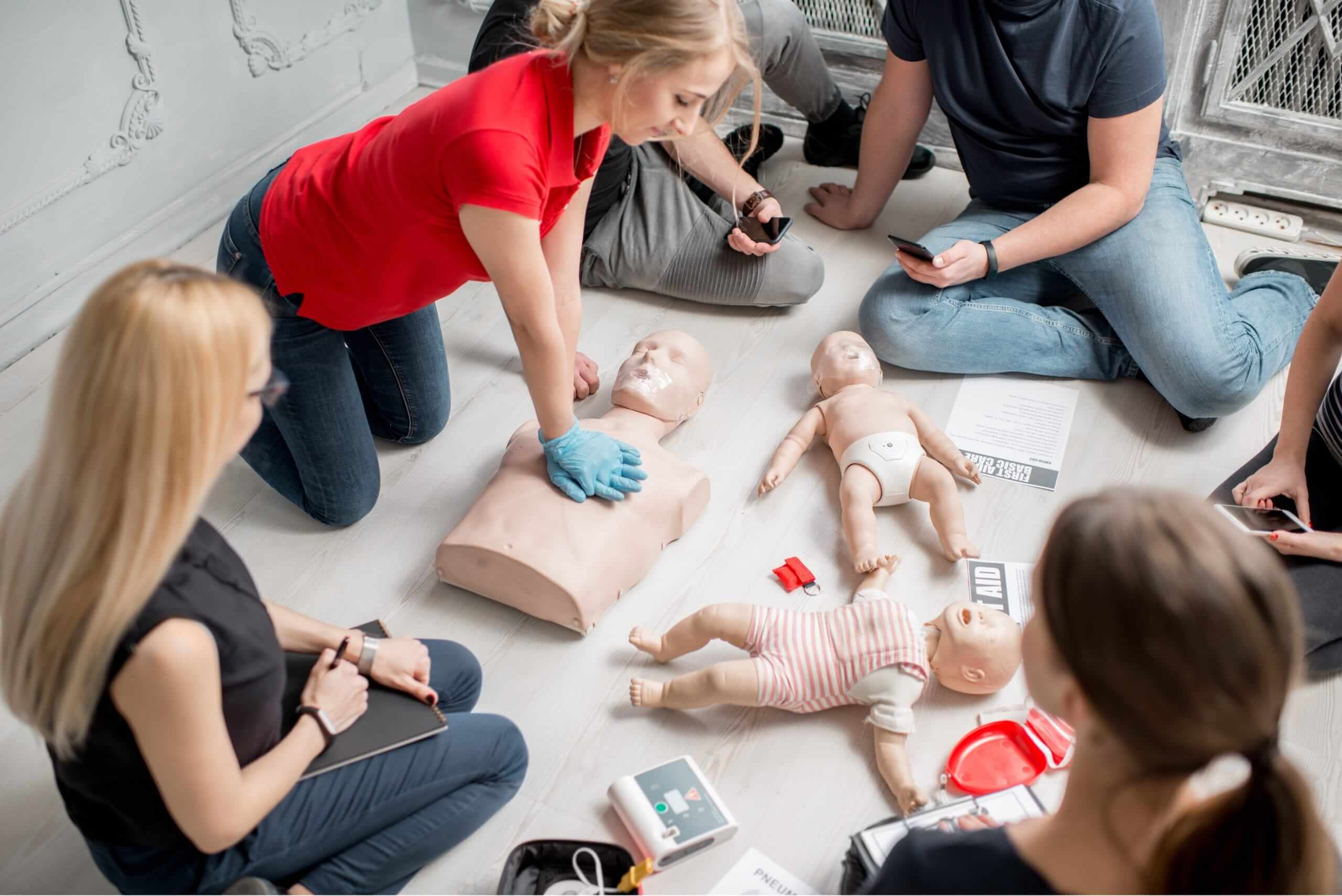
The first distinction worth understanding is the difference between a fully online course and a blended learning format. A fully online course covers theory only: recognizing cardiac arrest, understanding compression ratios, choking response, and AED operation, all delivered through video and text modules. A blended course pairs that same online theory with a hands-on skills session, either in person or through a supervised virtual assessment, where the learner demonstrates proper technique on a training manikin. For most healthcare roles, and for many other regulated positions across Massachusetts, this hands-on component is not optional. Employers and licensing bodies generally require documented proof that a certified individual can actually perform the physical skills involved, not just answer questions correctly about them.
This distinction matters especially for one of Boston’s largest employment sectors: childcare. The Massachusetts Department of Early Education and Care requires that at least one educator with current, age-appropriate CPR and First Aid certification be present at all times when children are in care, and this certification must include a practical, hands-on skills component. A fully online certificate without any skills verification does not meet this standard, and licensors check for current, valid certification during monitoring visits. Childcare providers and center staff throughout Boston should confirm that any course they choose specifically includes the hands-on assessment EEC requires, rather than assuming a general online CPR course will suffice.
Healthcare professionals working in Boston’s hospital systems face similarly strict expectations, generally requiring Basic Life Support certification aligned with American Heart Association guidelines, complete with a verified skills assessment. Fitness and wellness professionals, meanwhile, often have somewhat more flexibility depending on their specific employer, though many gyms and studios still expect a hands-on component as a matter of liability and professional standard, even when not strictly mandated by regulation.
Beyond confirming the right course format, a few additional details help separate a reliable provider from one that merely looks convenient. The course should align with recognized national guidelines, typically American Heart Association or American Red Cross standards, since these are the certifications most consistently recognized by Massachusetts employers and licensing bodies. The certificate itself should include some form of verifiable proof, such as a digital ID or QR code, allowing an employer or licensor to confirm validity directly rather than relying on a printed card alone. Course length is another useful indicator of quality, since a properly structured course, even one designed for flexibility, generally takes about an hour to ninety minutes for the online theory portion, not several hours of padded content.
Timing also matters in a city where healthcare and childcare licensing requirements are enforced consistently. Waiting until a certification is close to expiring before renewing can create scheduling conflicts, particularly for hands-on skills sessions that may need to be booked in advance depending on demand. Building renewal into a routine well ahead of the expiration date, rather than treating it as an afterthought, helps avoid gaps in compliance that could affect employment or program licensing.
Choosing the right CPR certification in Boston ultimately comes down to matching the course format to the specific requirement in front of you, whether that is EEC compliance for a childcare role, BLS certification for a healthcare position, or general workplace safety training. Healthcare professionals, childcare and education workers, fitness and wellness professionals, and parents and caregivers throughout Boston can find properly structured online and blended CPR courses, built around real compliance requirements, through Simple CPR, where convenience and genuine certification standards are treated as equally important.
