



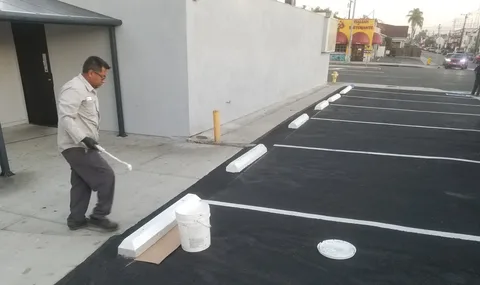
Every parking lot requires a different maintenance schedule based on traffic volume, climate, and pavement age. Crack sealing typically happens annually for high-traffic properties. Sealcoating works best on a 2 to 4 year cycle, depending on usage levels. Striping needs refreshing every 12 to 24 months to maintain visibility. Professional inspections should occur quarterly or monthly, based on how heavily the lot gets used.
Knowing the right frequency for each task prevents two costly mistakes that property managers commonly face. Maintaining too often wastes money on services your pavement does not need yet. On the other hand, waiting too long allows small problems to become expensive repairs. The goal of parking lot maintenance scheduling is to spend the least while keeping the pavement in excellent condition.
At-a-Glance: Service Frequencies
Different maintenance tasks follow different timelines, so here is the scheduling framework most commercial properties should use as a starting point.
-
Visual Inspections: Monthly for high-traffic lots or quarterly for moderate use
-
Crack Sealing: Every 1-2 years for heavy traffic or every 2-3 years for moderate traffic
-
Sealcoating: Every 2-3 years for high traffic or every 3-5 years for low traffic
-
Striping: Every 12-18 months for busy lots or every 18-24 months for lighter use
-
Pothole Repair: Within 48 hours of discovery, regardless of size
-
Drainage Cleaning: Quarterly inspections with cleaning performed as needed
Crack Sealing: Every 1-3 Years
Most commercial properties need crack sealing every 1 to 3 years, depending on traffic levels. This frequency matters because a crack sealed promptly for $1 per linear foot prevents a $100 pothole repair later.
By Traffic Level
-
High-traffic lots should be scheduled annually in the spring after winter damage appears.
-
Moderate-traffic lots can extend to every 2-3 years with regular inspections.
-
Low-traffic lots can go 3 years when surfaces remain in good condition.
Warning Signs to Act Sooner
Cracks exceeding 1/8 inch need immediate attention. Vegetation growing through the surface signals water has reached the base layer.
Sealcoating: Every 2-5 Years
This protective barrier needs reapplication every 2 to 5 years based on traffic volume, since heavy use breaks down the coating faster than light use.
Shopping centers and hospitals need a fresh sealcoat every 2-3 years due to constant vehicle movement. Office buildings and small retail locations should follow a 3-4 year cycle that balances protection with cost. Warehouses and residential complexes can extend to every 4-5 years since minimal traffic preserves the coating much longer.
Important: New asphalt requires 6-12 months of curing before the first application.
Striping: Every 12-24 Months
Most parking lots need new striping every 12 to 24 months, with traffic volume and weather exposure determining where you fall in that range. High-traffic lots need fresh paint every 12-18 months because constant tire friction wears markings quickly, while moderate-traffic lots can extend to 18-24 months as long as lines remain clearly visible.
After every sealcoating application, immediate restriping is required since the coating covers existing markings completely.
Inspections: Monthly or Quarterly
Regular inspections determine how quickly you catch problems, and the more frequently you inspect, the smaller your repair bills tend to be over time.
Document all findings with photos so you can track changes and identify developing issues before they require major repairs.
Best Season for Each Service
Knowing the right frequency is only half the equation since each parking lot maintenance service also has an optimal season for scheduling.
Spring: Assessment and Crack Sealing
Winter damage becomes visible during this season. It is the ideal time for an annual inspection and for addressing cracks before they spread or worsen.
Summer: Sealcoating Season
Warm and dry conditions make summer the best time for sealcoating. Materials need proper weather to apply correctly and require 24 to 48 hours to cure before traffic resumes.
Fall: Final Repair Window
Fall provides the last opportunity to complete remaining maintenance work. Temperatures are still suitable before they drop too low for proper curing.
Winter: Monitoring and Planning
Active maintenance slows during winter. The focus shifts to monitoring conditions, documenting issues, and planning upcoming work.
What Shortens or Extends Your Intervals
Standard frequencies work for typical properties, but your situation may require adjustments.
Factors That Require MORE Frequent Service
-
Shopping centers with thousands of daily vehicles
-
Lots serving delivery trucks or heavy equipment
-
Properties in northern freeze-thaw climates
-
Aging pavement beyond 15 years old
Factors That Allow LONGER Intervals
-
Office lots with business-hours-only traffic
-
Facilities used primarily by passenger cars
-
Properties in mild, dry climates
-
New pavement under 5 years old
Budgeting by Frequency
Understanding service intervals helps you budget each year accurately. Industry experts recommend allocating $0.10 to $0.25 per square foot annually for routine care.
For a 25,000 square foot lot, expect annual costs of $800-$1,500 for crack sealing, $1,000-$2,000 for sealcoating when prorated across the cycle, $400-$600 for striping, and $500-$1,000 for inspections and minor repairs. This totals $2,700-$5,100 annually, which prevents the $75,000+ emergency replacement from neglected pavement.
FAQs
How often should a parking lot be sealcoated?
Most lots need sealcoating every 2 to 3 years, though low-traffic properties can extend to every 4 to 5 years. New asphalt should cure for 6 to 12 months before the first application to allow oils to escape properly.
When should I repair vs replace my parking lot?
Repair makes sense when damage is localized, and the base remains solid. Replacement becomes more cost-effective when repair costs approach 50% of replacement value, when 25-35% of the surface needs removal, or when the lot is more than 20 years old with widespread alligator cracking.
Final Thoughts
Getting maintenance timing right saves thousands over the life of your pavement. Property managers who follow a structured schedule spend 3 to 5 times less than those who wait for problems to become emergencies. The difference between a 15-year lot and a 30-year lot comes down to consistent, well-timed care.
Stop guessing when your lot needs attention because Satterfield Paving’s Preventive Maintenance Program builds a custom calendar around your lot’s exact needs. Their team handles the inspections, schedules the services, and keeps your pavement protected year after year. You get one point of contact, predictable budgeting, and zero surprises.
Request a free assessment and let Satterfield Paving take maintenance timing off your to-do list for good.